My Design Journey
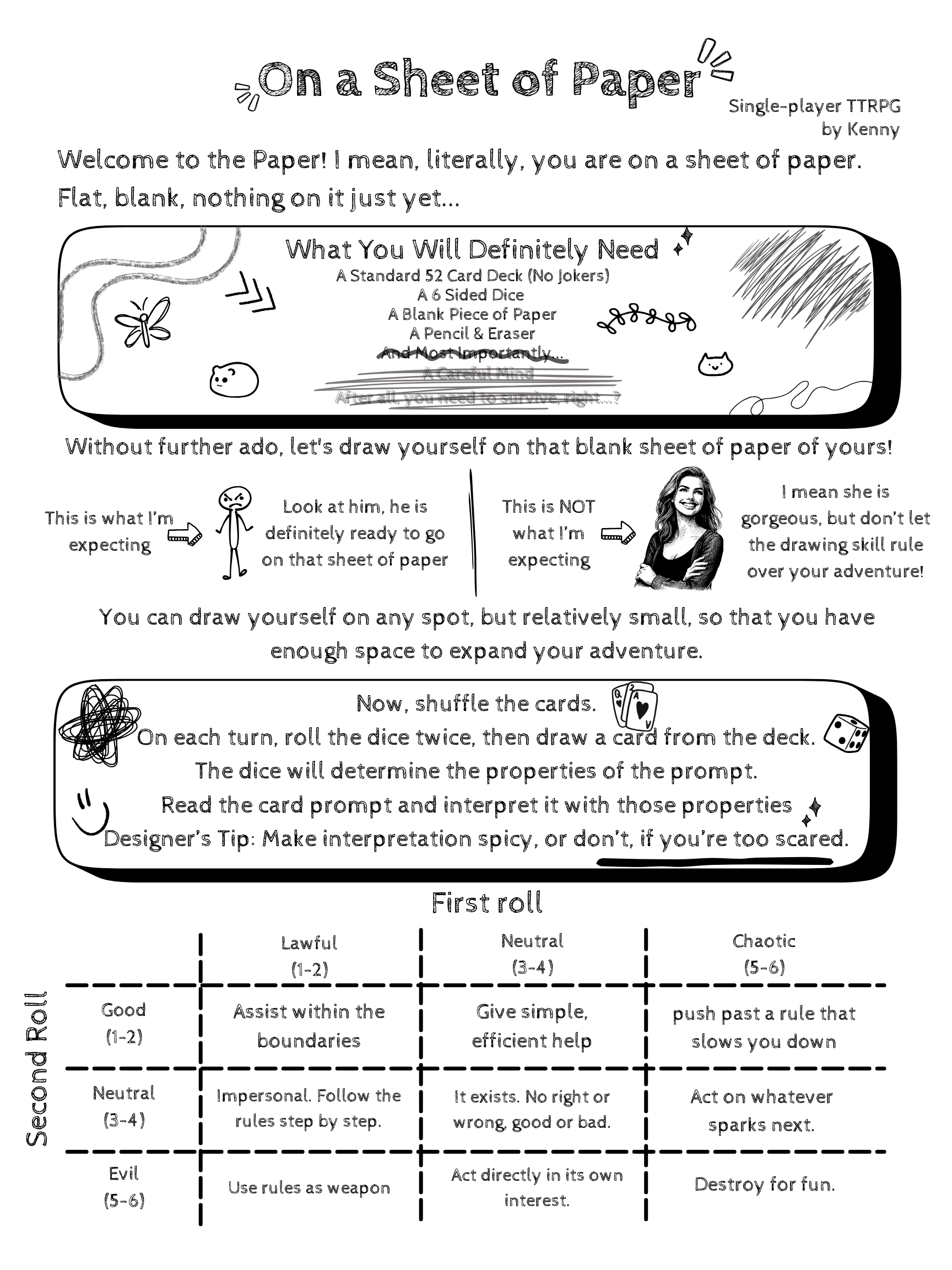
This tabletop game centers on how players shape the story when the designer steps back. Across my design process, I kept noticing that the less I controlled the outcome, the more invested the players became. I am interested in the point where the rules are just enough to hold the experience together, but not so firm that they close off the player’s interpretation. That space of shared authorship has become the main focus of my design.
I use simple materials—cards, dice, paper, drawing, and small physical actions—because they feel familiar and do not intimidate the player. By the final playtest, I emptied the setting and placed the player directly on a blank sheet. Here, folding, tearing, shading, and erasing became the story itself. The meaning came from what the player physically changed on the page.
Through the journey of designing this game, I learned that immersion grows when players feel trusted. When I stopped trying to control the narrative direction, the play became slower, more focused, and often more personal. Going forward, I want to continue designing frameworks that give players room to act first and interpret later, where the game is not something they follow, but something they leave traces in. The experience becomes theirs because they shaped it.